Which is the safer buy this winter: a Back Bay brownstone unit with a monthly fee under $350, or a full-service tower charging ten times that for a comparable square footage? Ask most buyers browsing Commonwealth Avenue and Marlborough Street this fall, and the answer feels obvious. Lower carrying cost, more character, better deal. A federal rule change now working its way through the mortgage system says the opposite might be true, and the reason has nothing to do with taste or location. It has to do with what's sitting in the building's reserve account, and how little time is left to fix it.
On March 18, 2026, Fannie Mae and Freddie Mac issued coordinated guidance, Fannie's version numbered Lender Letter LL-2026-03, that raises the minimum share of a condo association's annual budget that must go toward reserves from 10 percent to 15 percent. That change takes effect January 4, 2027. A companion rule already took hold on August 3, 2026: associations can no longer lean on "baseline" reserve funding, the practice of letting the reserve balance approach zero between projects, to satisfy a lender's review. Buildings that don't meet the new bar risk losing the "warrantable" status that makes their units eligible for conventional financing at all.
Back Bay's condo stock did not develop with this test in mind. The neighborhood splits into two building cultures that behave very differently under this rule, and the split runs roughly along the line between brownstone conversions and full-service towers.
What Changes on January 4
The mechanics are worth walking through slowly, because the deadline creeps up faster than a single date suggests. Roughly 75 percent of U.S. condo mortgages are underwritten to Fannie Mae standards, according to attorneys at KSN Law, which means the eligibility test applies to nearly every conventional buyer walking through an open house, not a narrow slice of the market.
Under the old standard, a lender simply checked whether an association budgeted at least 10 percent of assessment income toward reserves and moved on. Starting with loan applications dated on or after August 3, 2026, lenders have to look past that single line item and evaluate the association's overall reserve health, a shift the Community Associations Institute flagged to its members as one of the more consequential parts of the update. Then, on January 4, 2027, the floor itself rises to 15 percent, with one narrow exception: an association can rely on a reserve study instead, but only if that study is no more than three years old and the building is funding at the study's highest recommended level, not merely a baseline that avoids running out of cash.
Buildings that fail this review don't become unsellable. They become non-warrantable, which pushes buyers toward portfolio loans or non-conventional financing that carries higher rates and less favorable terms, and which KSN Law's attorneys note can depress a unit's marketability by 5 to 30 percent.
Back Bay's Housing Stock Wasn't Built for This Math
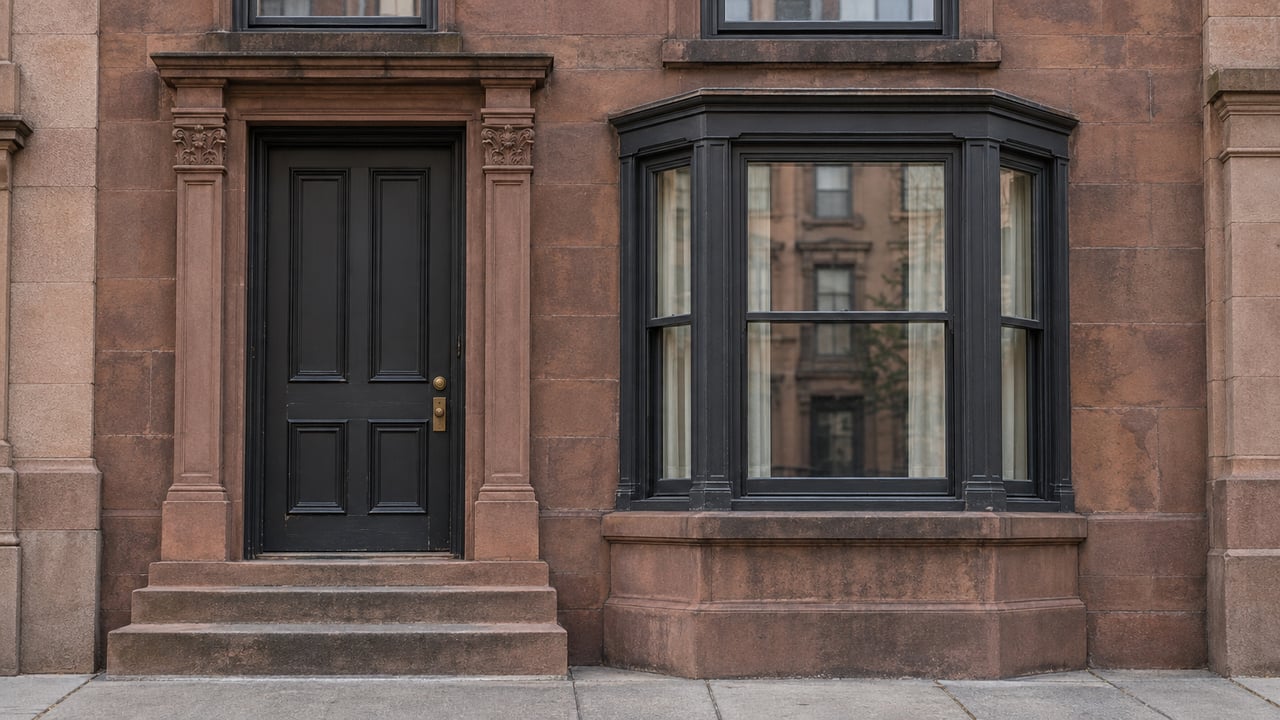
The reason this rule lands harder in Back Bay than in a newer downtown tower has to do with how the neighborhood's buildings are actually run. Brownstone conversions, the classic bow-front townhouses cut into a handful of units apiece, tend to form small associations, and small associations are frequently self-managed by the owners themselves rather than a professional firm. That structure keeps monthly fees low because there's no concierge staff, no valet contract, no fitness center to maintain. It also means reserve planning often happens informally, project by project, rather than through the kind of standing reserve study a larger association commissions as a matter of course.
Full-service towers built the other way. Higher fees fund professional management, and professional management tends to produce the paper trail, current reserve studies, documented capital plans, formal budgets, that a Full Review under the new guidelines wants to see. A building charging thousands a month in fees isn't automatically healthier than one charging a few hundred, but it is more likely to already have the documentation a lender is now required to examine.
This isn't a hypothetical concern specific to Back Bay's brownstones alone. Schernecker Property Services, a Needham-based firm that consults with condominium communities across Greater Boston, told Boston.com that of the hundreds of associations it has reviewed, not one was properly funded to maintain its infrastructure over the long term, and most were dramatically underfunded, according to executive vice president Eric Churchill in reporting from Boston.com. Churchill's read on why is direct: boards keep fees artificially low to keep owners happy, then get caught when major systems age out all at once. That dynamic shows up across the region, but it concentrates in exactly the building type Back Bay has the most of.
The New England Problem a Generic Reserve Study Doesn't Solve
Even a building that commissions a reserve study on schedule faces a second, more regional wrinkle. Reserve studies estimate the remaining useful life of major systems, roofs, boilers, masonry, based on national averages that assume a fairly mild climate. A roof rated for 25 years in that model can fail closer to 18 years in New England, worn down faster by ice damming and repeated freeze-thaw cycling that a generic study doesn't fully price in.
For a Back Bay brownstone, this compounds the reserve gap rather than offsetting it. Façade repointing, slate roof repair, and masonry work, the capital projects that eat most of a historic building's reserve fund, also require sign-off from the Back Bay Architectural Commission before work can begin, which adds time and often cost to projects that a lender now wants documented and funded years in advance, not scheduled reactively after a problem surfaces.
What a Lower Fee Buys You, and What It Doesn't
| Brownstone conversion | Full-service tower | |
|---|---|---|
| Typical monthly fee | Roughly $290 to $711 in current comparable listings | Often $2,000 to $3,700+ for larger units |
| Association structure | Small, frequently self-managed | Larger, professionally managed |
| Reserve documentation | Often informal, project by project | Formal reserve study more common |
| Biggest capital cost | Façade, roof, masonry, subject to historic district review | HVAC, elevator, building systems |
| Warrantability risk under the new rule | Higher, absent a current reserve study | Lower, if reserves are already professionally tracked |
The fee tells you what a unit costs to carry each month. It does not tell you whether the building will still qualify for conventional financing four months from now, and under this rule those two numbers are no longer as connected as they used to be.
What to Ask For Before You Write an Offer
A buyer's agent working a Back Bay brownstone this fall has a narrower window than usual to get real answers, since a file dated on or after August 3, 2026 already triggers the deeper Full Review standard. Before you write an offer, request:
- The current annual budget, showing the reserve line item as a percentage of assessment income
- The most recent reserve study, and confirmation it was conducted or updated within the last three years
- Two years of board or annual meeting minutes, to catch a special assessment vote you'd otherwise learn about at closing
- Any pending or recently completed special assessment, including the amount per unit and payment status
- Confirmation of whether the association is self-managed or professionally managed, since that shapes how quickly a lender's questionnaire gets returned
Self-managed associations can take one to three weeks or longer to complete a lender questionnaire, compared to a matter of days for a professionally managed building, a timing gap that matters more than usual heading into a hard January deadline.
A Note on the State Law Backing All This Up
Massachusetts already requires condominium associations to maintain a replacement reserve fund under state law, so the federal rule change layers onto an existing obligation rather than inventing a new one. It also raises the stakes on the other side of a special assessment. When an association levies one to cover a shortfall the reserve fund should have absorbed, that assessment becomes part of the lien against the unit, and an owner who can't cover a large lump sum can, in the most severe cases, face foreclosure to recover the funds. Adequate reserves aren't just a lending formality. They're the thing standing between a manageable monthly fee and an unmanageable one-time bill.
Frequently Asked Questions
Does this rule apply if I'm paying cash? A cash buyer doesn't need the loan approved, but the building's warrantable status still shapes resale value and the pool of financed buyers who can bid on the unit later. An all-cash purchase in a non-warrantable building can still be a sound decision. It's worth knowing the building's status going in.
Can a brownstone association fix this before January? Yes, by commissioning a current reserve study and funding to its highest recommended level, but Habitat Magazine reported in September 2026 that this route sometimes reveals the building needs even more in reserves than the flat 15 percent would have required, since older buildings often carry capital needs above that floor.
Does a lower fee always mean a smaller reserve? Not necessarily. Some smaller associations fund reserves conservatively despite modest monthly charges. The fee alone doesn't answer the question. The budget line item and the reserve study do.
If you're weighing a Back Bay brownstone against a full-service building this season, the fee on the listing sheet is the easy number to compare. The one that actually determines whether your financing holds together is buried in a budget and a reserve study most buyers never ask to see before they're already under contract. Rachel Lieberman reviews those documents as part of every Back Bay offer she writes, before the number on the listing becomes the number in your mortgage application.