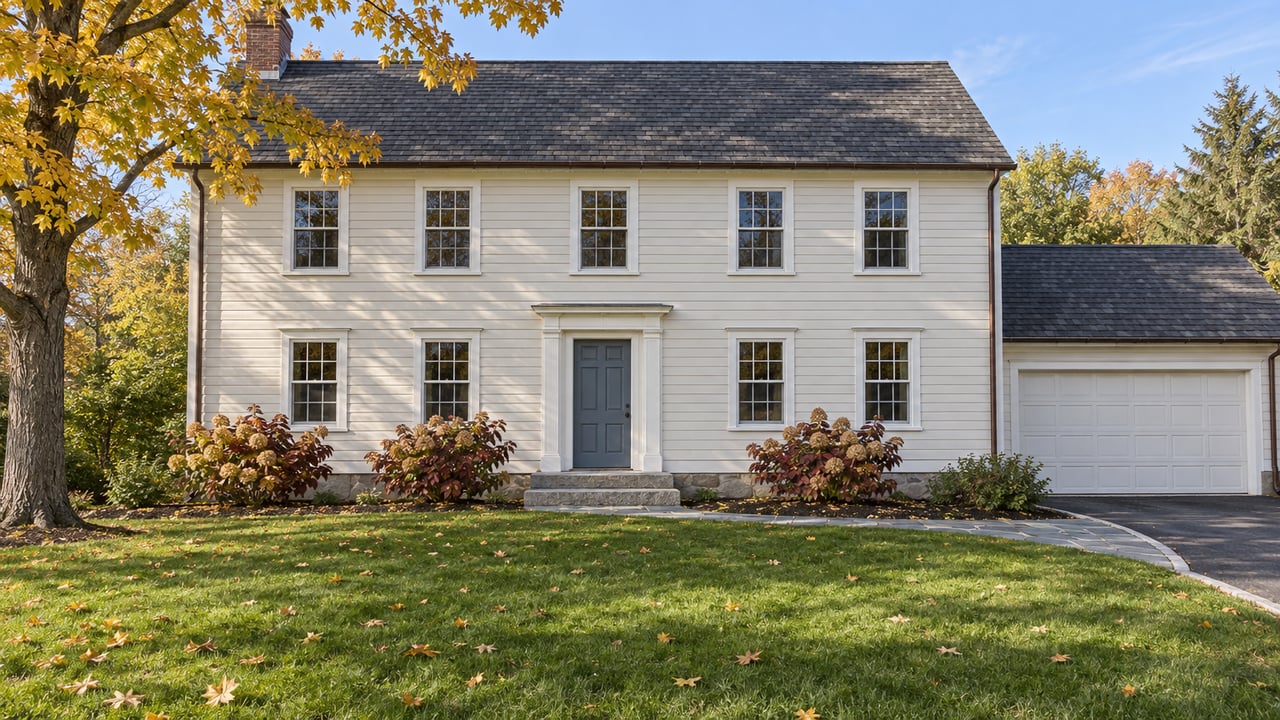
Sherborn's Groundwater Protection Committee counts more than 1,500 private wells and septic or cesspool systems in town. In most Sherborn homes, the water you drink and the wastewater you flush are handled on the same lot, often not far apart. The committee raised concerns about groundwater quality in a 2024 letter to the Select Board.
The town's own sampling data shows why groundwater quality matters, and the committee has spent much of 2026 discussing whether to require well testing at sale.
Septic inspections and groundwater
The septic inspection checks one thing. Mass.gov says it determines whether the system "in its current condition can protect public health and the environment." It doesn't tell a buyer anything about what that system may have been doing to the groundwater the well draws from.
What the installation test covers
Sherborn's 2023 new-well rules include testing for pH, iron, manganese, nitrate, nitrite, sodium, chlorides, lead, arsenic, volatile organic compounds and PFAS.
Well-water testing records for houses on the market may date back to when the well was drilled.
Why the well and the septic belong in the same conversation
The Groundwater Protection Committee's September 26, 2024 letter to the Select Board links the two systems directly. Committee members said they had become "increasingly concerned about the elevated levels of nitrate and PFAS in Sherborn's groundwater." They pointed to existing septic systems, legacy cesspools and areas with many septic systems close together as significant factors.
- PFAS in private wells. MassDEP ran a free PFAS sampling program for private wells from July 2020 through June 2022 and sampled 34 Sherborn wells. According to the final report, dated December 2023, 15% of them, or five wells, came in above the state's 20 parts-per-trillion PFAS6 benchmark, and 38% were below 2 ppt. The committee's own analysis found that 11 of the 34 wells were above either the state threshold or the federal PFOA/PFOS level of 4 ppt that had been proposed at the time.
- A broader screen. In 2022, the committee and RCAP Solutions tested 41 residential wells at no cost to residents. In a January 3, 2023 release, the committee reported that 42% had at least one result above a public-water standard, including 15 coliform results, two radon results and one uranium result.
- Nitrate as a septic signal. Across those 41 wells, nitrate averaged 1.7 mg/L. Results ranged from below 0.1 to 5.1, and 16 wells were at 2 mg/L or higher. Committee chair Tom Trainor has told the committee that natural nitrate levels in Sherborn groundwater usually sit near the lab detection limit of about 0.1 mg/L, and that results above 1.0 mg/L suggest some septic influence on a well.
The state's PFAS in private wells FAQ describes MassDEP's 20 ppt PFAS6 limit as a public drinking water standard, and the sampling program compared private-well results against it.
The 2026 case that moved the conversation
At its May 20, 2026 meeting, the committee heard about a homeowner whose well had tested just over 10 mg/L for nitrate, the MassDEP maximum. The property is outside the town's denser one-acre zoning area, but several septic leaching fields sit within 200 feet of the well. The minutes record that it was the first nitrate result over 10 that Trainor had ever seen in Sherborn, from a private or public well. Members then discussed a town regulation requiring owners to test well water when a property is sold. The minutes describe that as a requirement Dover and many other Massachusetts towns already have, and one MassDEP recommends in its model Board of Health regulations.
By the July 8, 2026 meeting, the idea had become one of the potential recommendations Trainor presented for the town's updated Open Space and Recreation Plan: requiring water-quality testing at the time of a residential sale. Members also discussed standardizing the testing, possibly with the Board of Health or its health agent overseeing sampling, and taking samples both before and after any treatment system in the home. Trainor planned to refine the draft recommendations and share them with the committee and other relevant committees for review.
As of those July minutes, sale-time testing was a potential recommendation under review, and the town had not adopted it as a rule. Still, the town's own groundwater specialists now see sale-time well testing as a gap worth closing, and they point to a neighboring town that already requires it.
Old cesspools and the town discussion
Older cesspools also come up at the local level. In September 16, 2026 Board of Health minutes, the board's representative discussed replacing cesspools after a property transfer and said a provision had been left out when the regulations were recodified.
What help exists for private-well owners
MassDEP recommends testing every private drinking-water well for PFAS. If nothing is detected, it recommends retesting at least once every 10 years, or on whatever schedule the local health agency sets. In its 2024 guidance, the Groundwater Protection Committee estimated a PFAS test at $300 to $400 and suggested it especially where nitrate is above 1 mg/L. It also directed residents to the Board of Health or the committee for referrals to certified labs.
The free state sampling program has ended. In January 2026, MassDEP sent the Legislature a report on establishing a statewide private well program. It lays out four options, ranging from expanded guidance to a funding program modeled on the Community Septic Management Program to a fully state-run testing and remediation program, and offers cost estimates that decision-makers can use to weigh them.
The town is working through the same issue on its own wells. As of the committee's July 2026 minutes, the Town Campus well had tested at 20.4 ppt PFAS6 on June 16, just above the standard. Its new treatment system was still waiting for final MassDEP approval, and four Town Campus buildings were using bottled water until treatment is in place.
Questions worth raising before an offer on a Sherborn home
- When was the well last tested, by which certified lab, and did the test include PFAS by Method 533 or 537.1, nitrate and the bacteria panel?
- Is there a water treatment system, and are there results from both before and after it?
- Is the wastewater system a septic system or a legacy cesspool?
This post is general information, not legal, health or financial advice. Confirm how these rules apply to a specific property with the Sherborn Board of Health, a MassDEP-approved system inspector, a certified lab and your attorney.
If you are buying or selling in Sherborn this season, Rachel Lieberman can help you plan your next move. Schedule a strategy call.